When NOT to Hire a Handyman (And Why We’ll Tell You)

It may sound strange to say this - but a good handyman won’t always take your job. I recently had an experience in Winnetka, which prompted this article.
One of the biggest signs you’re dealing with a professional handyman (not a gig worker or a sales-driven operation) is this:
They’ll tell you when a handyman is not the right solution.
This article explains when you should not hire a handyman, why it matters, and how knowing the difference can save you time, money, and frustration.
Why This Question Matters
Many homeowners hesitate to call a handyman because they’re unsure:
Is this too big of a job?
Do I need a contractor instead?
Will I waste someone’s time?
Will I be told “yes” just to get the work?
Those are reasonable concerns.
The truth is, handymen and contractors serve different purposes, and confusing the two often leads to:
Delays
Failed inspections
Unexpected costs
Redone work
Knowing when not to hire a handyman is just as important as knowing when to call one.
1. Structural Changes or Load-Bearing Work
If a project involves:
Removing or altering walls
Changing the structure of the home
Modifying beams, joists, or supports
❌ This is not handyman work.
Structural changes require:
Engineering considerations
Permits
Inspections
A licensed contractor
A handyman should never guess when the structure of your home is involved.
2. Large-Scale Remodels or Additions
Handymen excel at repairs and improvements, not full transformations.
If your project includes:
A full kitchen remodel
Bathroom gut renovations
Room additions
Major layout changes
❌ You’re better served by a contractor or design-build firm.
However, many homeowners don’t realize this:
A handyman is often perfect before or after a remodel - for punch lists, finishing work, and corrections.
3. Major Electrical Work
A handyman can often handle:
Fixture replacement
Ceiling fans
Switches and outlets (existing wiring)
But if your project involves:
New electrical panels
New circuits
Rewiring
Service upgrades
❌ That crosses into licensed electrical work.
Electrical systems are not an area for shortcuts - or guesswork.
4. Major Plumbing Changes
Similarly, a handyman can often help with:
Faucet replacements
Toilet repairs
Fixture swaps
Minor leaks
But if the job includes:
Moving plumbing lines
Reconfiguring drains or vents
Sewer or main line work
❌ A licensed plumber is the right call.
5. Roofing Replacement or Large Exterior Projects
Small exterior repairs are often fine for a handyman:
Replacing trim
Fixing fascia
Repairing deck boards
But:
Full roof replacements
Major siding installations
Large structural exterior repairs
❌ These should be handled by specialists or contractors.
6. Jobs That Require Extensive Permitting
If your project clearly requires:
Architectural drawings
Multiple permits
Scheduled inspections
That’s usually a sign you’ve moved beyond handyman scope.
A good handyman will:
Tell you upfront
Help you understand next steps
Often recommend the right professional
Why We’ll Tell You “No” (And Why That’s Good for You)
Here’s the part most homeowners don’t expect.
Saying “yes” to every job:
Creates liability
Leads to poor outcomes
Hurts long-term trust
A professional handyman’s goal is not to do everything, but to:
Do the right work
Do it well
Do it legally
Protect your home
Sometimes that means telling you:
“This is outside handyman scope - and here’s who you should call instead.”
That honesty saves everyone time and money.
When a Handyman Is the Right Choice
To balance this out, a handyman is ideal when:
The job is repair-based, not structural
You have multiple small to medium tasks
You want efficient, one-visit solutions
You’re preparing a home for sale
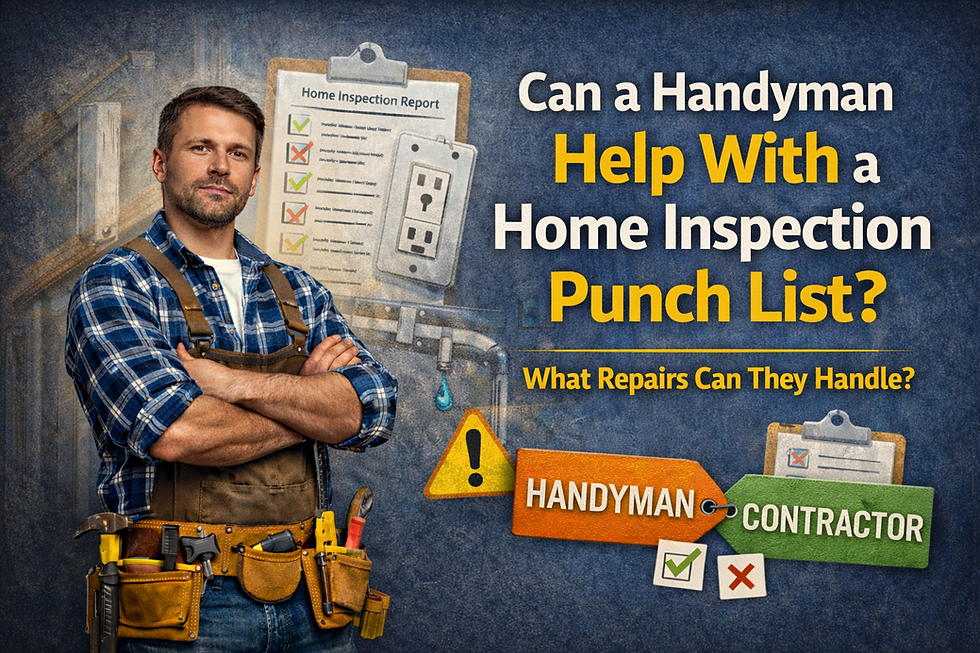
You need inspection punch-list items addressed
You want professional results without contractor overhead
This is where a handyman shines.
Unsure Which Category Your Project Falls Into?
Most homeowners don’t know - and that’s completely normal.
The right approach isn’t guessing. It’s asking.
A trustworthy handyman will:
Ask clarifying questions
Look at the full scope
Tell you honestly if it’s a good fit
Help guide you if it’s not
Final Thought
Hiring a handyman isn’t about cutting corners - it’s about choosing the right tool for the job.
And sometimes, the right tool is knowing when not to use one.
If you’re unsure whether a handyman is the right fit for your project, a quick conversation can give you clarity - and peace of mind - before anything moves forward.
Need an Honest Assessment?
If you’d like a straightforward opinion on whether your project is a good fit for a handyman, reach out. Even if the answer is “no,” you’ll walk away knowing the right next step.


Comments